Advancing Quantum Software, Security, and Use Cases for Finland’s Next Phase of Growth
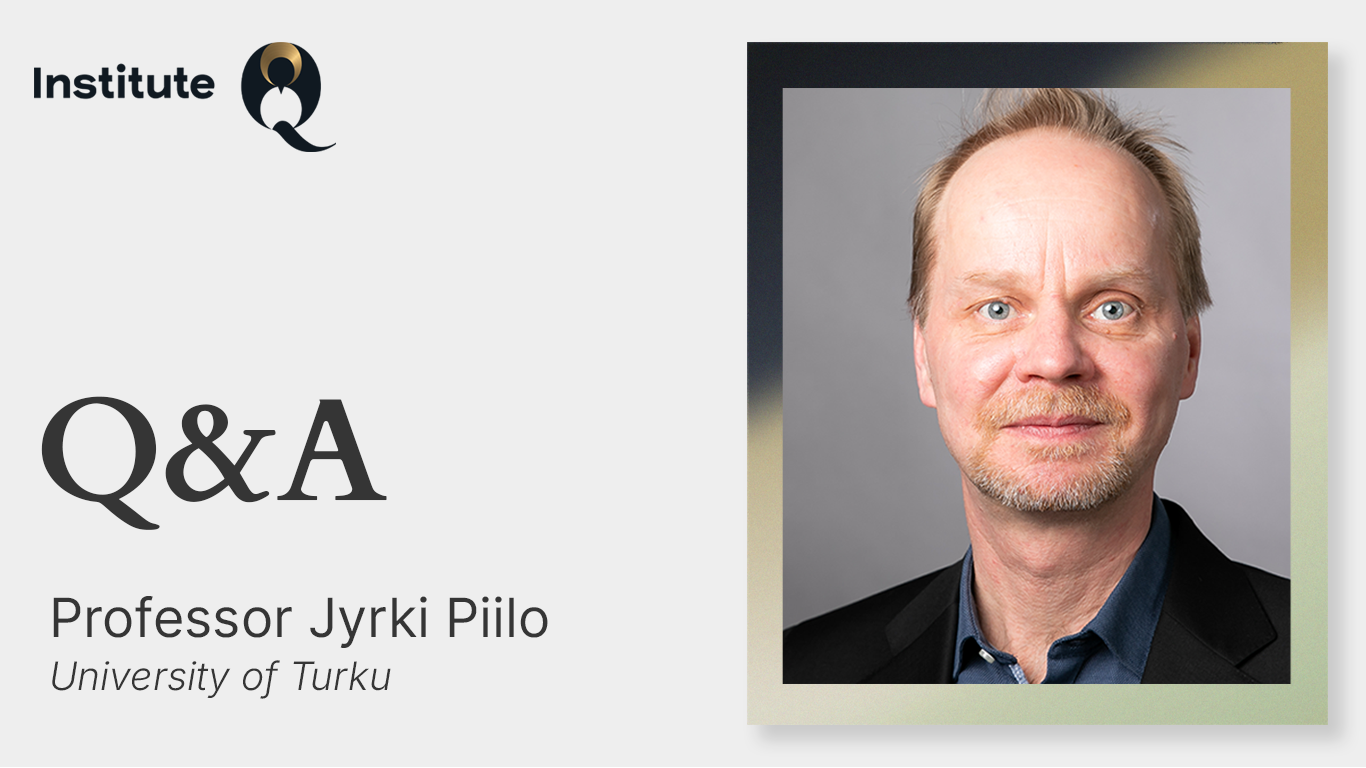
Continuing the InstituteQ Q&A series highlighting researchers across the InstituteQ network, we turn next to the University of Oulu, where quantum research is increasingly focused on the practical use of quantum computing.
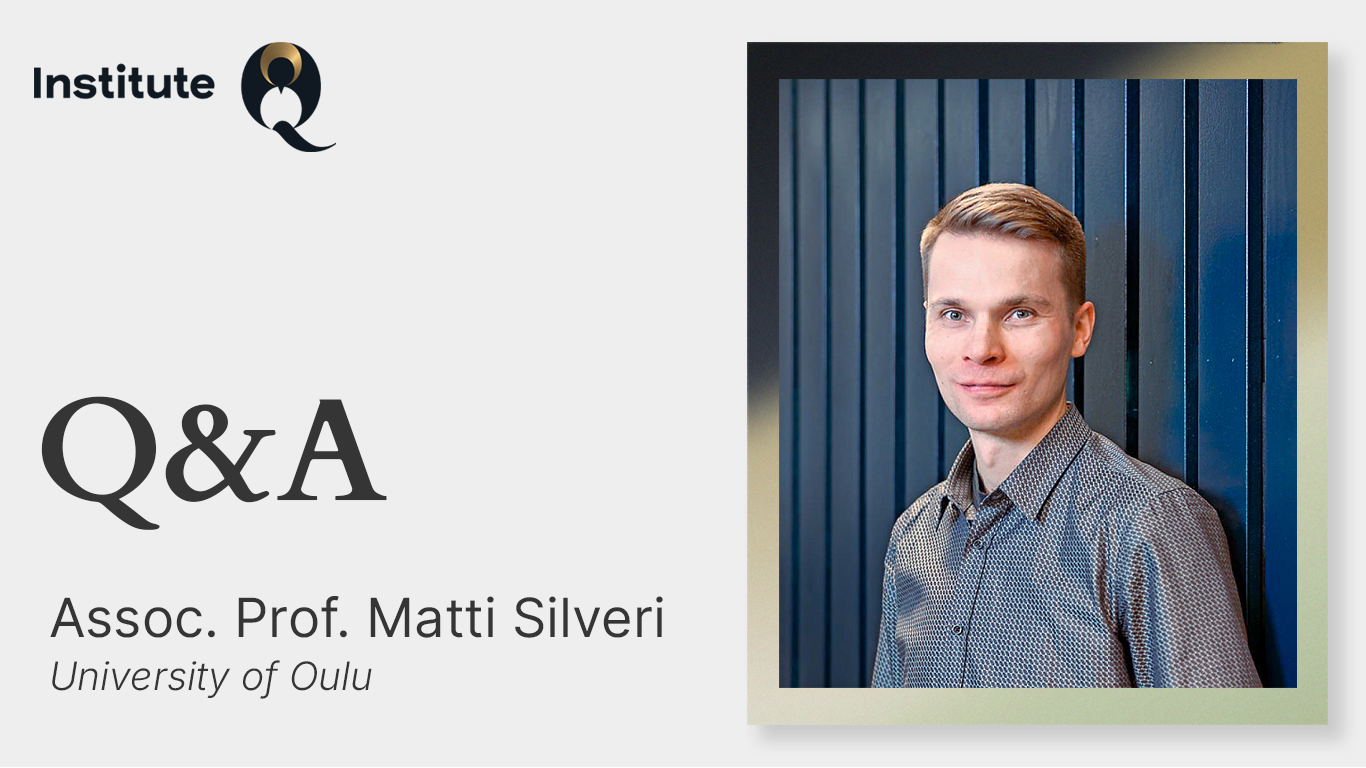
In this interview, Associate Professor Matti Silveri outlines how Oulu’s strengths span quantum algorithms, software engineering, cybersecurity and the modelling of quantum devices, thus reflecting a broader shift in the field toward real-world applications, hybrid quantum-classical approaches and industry engagement.
With growing research teams, new multidisciplinary initiatives and strong collaboration with both academic and industry partners, the University of Oulu is positioning itself as a key contributor to Finland’s ambition to build a globally competitive quantum software ecosystem.
What are the University of Oulu’s areas of expertise in quantum science and technology?
Our expertise profile is in quantum computation through algorithms, practical usage of online quantum computers, computational use-cases in molecules, materials and optimization, error correction and mitigation, empirical software engineering, cybersecurity of quantum technologies as well as theory and modelling of quantum devices and materials.
What are some recent highlights of the University of Oulu’s work that you wish to lift up to the InstituteQ community?
The first highlight is the Business Finland project “Towards reliable quantum software development: Approaches and Use-cases” 2023-2025 together with University of Jyväskylä and 9 companies. The project had broad impact in different research groups, including a diverse set of publications ranging from quantum algorithms reviews via improved quantum compiler methods to summarizing essay on quantum prospects for Finnish industries. It also impacted our collaborative networks and led to following projects, for example, in quantum cybersecurity combining computer science and theory of quantum hardware.
Another highlight is that our research groups have grown in the number of quantum researchers. For example, we have several PhD researchers studying different use-case areas and their computation pipelines, and a completely new research team in applied quantum computing for molecules and materials started operations in 2024. Quantum computing is also recognized as one of the research focus areas of the University of Oulu. With these positive and uplifting trends, we are very happy and open for collaborations and for new initiatives within InstituteQ community and beyond.
How has the University of Oulu’s role in Finland’s quantum ecosystem evolved over the past few years, and where do you see it heading next?
The University of Oulu’s focus earlier was mostly in theory of macroscopic quantum many-body physics, for example, superconducting quantum devices as well as fundamental experimental research on atomic and molecular systems. In the past few years, we have expanded and shifted attention more towards quantum computing via practical quantum computer programming, quantum algorithms, middleware such as physics-aware compilation, empirical quantum software engineering and cybersecurity of quantum technology.
What are some global trends of the field that you are paying special attention to?
Globally, as well as in Finland and Nordic countries, research and ecosystem activities have been quite hardware-dominated up to the 2020s. However, by the increased availability of online and onsite quantum computers, trends in quantum software, use-cases, hybrid quantum-classical and practical involvement of early industry utilizers are rising. By benefiting from our university’s genuine in-built multidisciplinarity, we are paying special attention to these growing research areas.
What do you see as Finland’s greatest strengths, or biggest opportunities, in the global quantum landscape?
Finland’s greatest strengths are a solid history in directly related fundamental sciences such as low-temperature physics and closely related applied sciences such as wireless communication, and common momentum and coherent direction as a small nation. Competitive quantum and classical computation infrastructures, international collaboration networks as well as rapidly growing and active network of quantum start-ups, companies and research institutes in the whole of Finland are the biggest opportunities that we should leverage as well as possible.
How do you see the role of the University of Oulu in Finland’s Quantum Technology Strategy 2025-2035?
Finland’s Quantum Technology Strategy and the following Roadmap: Finnish Quantum Technologies by 2035 are excellent documents, and the processes with active community activation were productive and beneficial. It is easy to find our role in the implementation of the Strategy and Roadmap.
The 2035 vision paints the following picture for Finland’s future:
- Finland has the world’s leading quantum software sector, which supports the creation of solutions in companies that use quantum computing.
- Companies in different fields operating in Finland use quantum technology as global pioneers in their business. This has created completely new solutions that improve productivity and create competitiveness.
- Finland has one of the world’s leading quantum computers with a thousand logical qubits.
The first two points are about efficient and diverse utilization of quantum computers. By combining fundamental quantum physics, mathematics, engineering and various use-case application areas in University of Oulu we will be contributing substantially towards these goals. Finland’s aim to have a large logical qubit bases quantum computer means also that Finland needs to strongly ramp up research and development activities in quantum error correction and mitigation and fault tolerant computation methods. We have been active in these already and will be focusing in them increasingly more.
The University of Oulu is a member of InstituteQ. How can national initiatives like InstituteQ help Finland stay at the forefront of the quantum tech development?
InstituteQ has several roles that one or a few universities couldn’t do effectively alone. Connecting people beyond disciplinary borders, creating events and contributing to national initiatives such as the QDOC doctoral education pilot and the Finnish Quantum Flagship, as well coordinating educational and ecosystem development. InstituteQ is also a stable framework not based on certain funding periods. This stability will be important in creating continuity. For example, I see that Finnish Quantum Days is becoming a regularly organized event thanks to InstituteQ efforts.
How does the University of Oulu work with other universities and research institutes to support quantum education and workforce development?
We are actively participating in national education networks such as EduQ and FysNet by collectively developing online courses, reducing course overlaps and forming new course packages. Furthermore, we are introducing and creating new type of quantum courses, e.g., for engineering students to widen the scope of quantum education beyond physics and computer-science. Furthermore, via collaborative Business Finland projects with other universities, we have built good connections to companies which has already resulted in increased job opportunities for our graduates.